How to Read a Forex Quote: Pips, Spreads and Lots
By Laura Bennett · Published · Updated · 6 min read
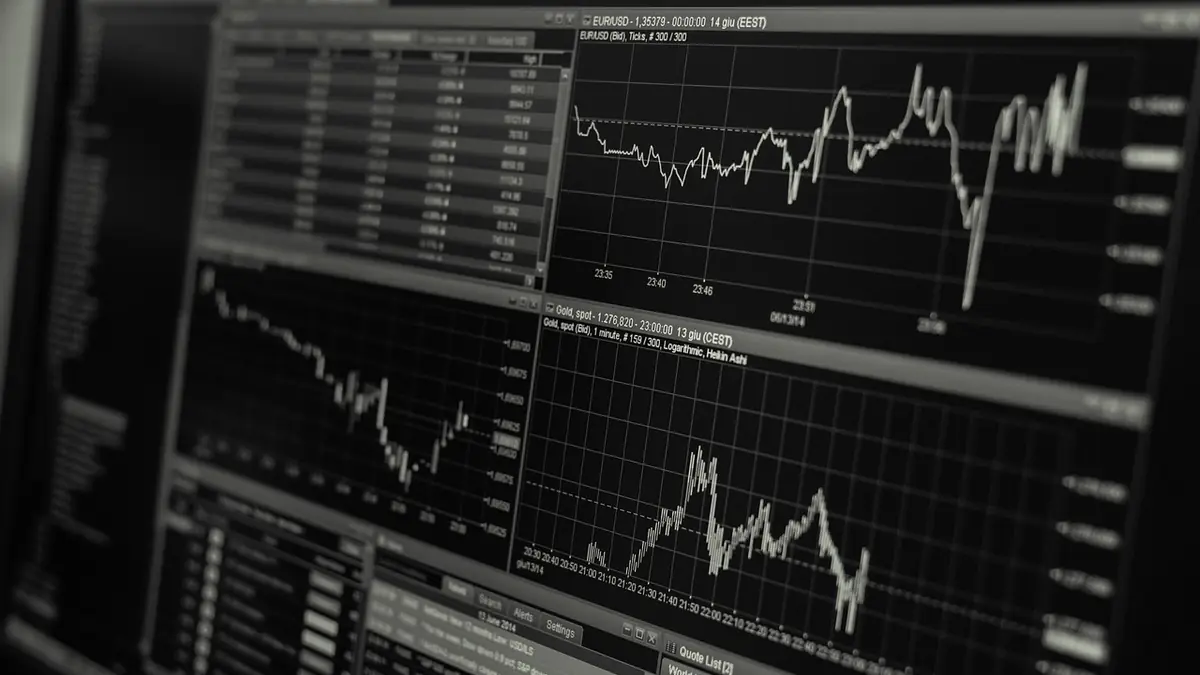
A forex quote looks simple until you have to act on it: two prices, a percentage change, a pip count, and a lot size field on the order ticket. Misread any one of those and the trade you place is not the trade you planned. This guide walks through a real quote line by line so the numbers stop blurring together.
We will cover base and quote currency, bid versus ask, what a pip is worth in your account currency, how the spread turns into a per-trade cost, and how lot size connects all of it to risk. By the end you should be able to look at EUR/USD 1.0847 / 1.0849 and immediately know what you pay, what you risk, and what moves your P&L.
Base Currency, Quote Currency and What the Number Means
Every pair has a base currency (the first one) and a quote currency (the second). In EUR/USD, EUR is the base and USD is the quote. A price of 1.0849 means one euro buys 1.0849 US dollars. That is the whole idea: the number is an exchange rate expressed in the quote currency.
This matters because the base currency is always one unit. When the price rises, the base is getting stronger against the quote; when it falls, the base is weakening. If you buy EUR/USD you are long euros and short dollars. If you sell, you are short euros and long dollars. There is no separate instrument, just a ratio.
Direction confusion mostly comes from reading a chart without checking which currency is base. On USD/JPY, a rising chart means the dollar is strengthening. On EUR/USD, a rising chart means the euro is strengthening. Same up arrow, opposite meaning for the dollar. Read the pair name before you read the chart.
- Base currency = first symbol, always one unit
- Quote currency = second symbol, the price is in it
- Buy the pair = long base, short quote
- Rising price = base strengthening, not always USD
Bid, Ask and the Spread: Where Your Cost Hides
Quotes come in two prices. The bid is what buyers are offering (you sell here); the ask is what sellers want (you buy here). The ask is always slightly higher. The gap between them is the spread, and it is your first cost on every trade, paid the moment you enter. A quote of 1.0847 / 1.0849 means a 2-pip spread.
Spreads vary a lot by pair and session. Major pairs like EUR/USD typically run from under 1 pip on raw-spread accounts up to 1.5–2 pips on standard accounts during liquid hours, and widen noticeably around news releases and the daily rollover. Exotic pairs and minor crosses can run 5–30 pips or more, and much wider in thin conditions.
Here is the practical point: if you buy at the ask and immediately sell at the bid, you lose the spread. On a 1-pip spread with a 10,000-unit position, that is about $1. On a 3-pip spread with 100,000 units, that is roughly $30. Cost scales with size, not with how confident you feel.
Commission accounts flip this around: near-zero spreads plus a fixed commission per lot. Compare total cost, not headline spread. A 0.2-pip spread plus $7 per round turn on 100,000 units works out to roughly $9 total, which may beat a 1-pip spread with no commission. Do the math per pair you actually trade.
- Bid = you sell; ask = you buy; ask is higher
- Spread is paid on entry, whether the trade wins or loses
- Expect wider spreads at rollover and around data releases
- Compare spread + commission, not spread alone
Pips and Pip Value in Your Account Currency
A pip is the standard unit of price movement. For most pairs it is the fourth decimal place: 1.0847 to 1.0848 is one pip. For JPY pairs it is the second decimal place: 145.20 to 145.21 is one pip. Many platforms show a fifth decimal (a pipette) as a smaller fraction of a pip; ignore the final digit when counting pips.
Pip value depends on position size and the quote currency. With a standard lot (100,000 units) on a pair where USD is the quote currency, one pip is about $10. With a mini lot (10,000 units) it is about $1, and with a micro lot (1,000 units) about $0.10. That is why lot size, not leverage, is the main lever on your risk.
When USD is not the quote currency, pip value in dollars shifts with the exchange rate. On EUR/USD at 1.0849, a 10,000-unit position gives roughly $0.92 per pip, not exactly $1. Most platforms display the exact value on the order ticket, so check it rather than estimating.
Pip value is what turns a stop distance into a money figure. A 30-pip stop on a mini lot risks about $30; the same stop on a standard lot risks about $300. Same chart, ten times the exposure. This is exactly why position sizing should be calculated before entry, not after a loss.
Lot Sizes and Leverage Without the Confusion
A standard lot is 100,000 units of base currency, a mini lot is 10,000, a micro lot is 1,000, and a nano lot is 100. Notional value is the position size converted to your account currency. At EUR/USD 1.0849, one standard lot is about $108,490 of notional exposure. That sounds enormous because it is; leverage is what lets a small account hold it.
Leverage is expressed as a ratio, such as 30:1 or 100:1, and it sets the margin your broker locks up. At 30:1, a $108,490 position needs roughly $3,616 in margin. At 100:1 it needs about $1,085. Margin is not risk; it is collateral. Your risk is the distance to your stop multiplied by pip value, and that can exceed your margin requirement quickly.
Beginners often read high leverage as permission to trade bigger. It is not. It reduces the cash needed to open a position while leaving the loss per pip unchanged. A 50-pip move against a standard lot is roughly $500 whether leverage is 30:1 or 500:1. Pick lot size from risk, then confirm the margin fits.
- Standard 100,000 / mini 10,000 / micro 1,000 units
- Leverage changes margin, not loss per pip
- Keep risk per trade in a fixed range, often 0.5–2% of equity
- Check margin before entry, especially around news
| Pair | Typical spread (pips) | Pip value, 1 lot | Spread cost, 1 lot | Spread cost, 0.1 lot |
|---|---|---|---|---|
| EUR/USD | 0.8 – 1.5 | ~$10 | ~$8 – $15 | ~$0.80 – $1.50 |
| GBP/USD | 1.0 – 2.0 | ~$10 | ~$10 – $20 | ~$1 – $2 |
| USD/JPY | 0.8 – 1.5 | ~$6.80 | ~$5 – $10 | ~$0.50 – $1 |
| AUD/USD | 1.0 – 2.0 | ~$10 | ~$10 – $20 | ~$1 – $2 |
| EUR/GBP | 1.5 – 3.0 | ~$12.60 | ~$19 – $38 | ~$1.90 – $3.80 |
| USD/TRY | 30 – 120+ | ~$2.80 | ~$84 – $340 | ~$8 – $34 |
| GBP/JPY | 2.5 – 5.0 | ~$6.80 | ~$17 – $34 | ~$1.70 – $3.40 |
Reading an Order Ticket End to End
An order ticket pulls all of this together. You will see the pair, the direction, the entry price, the stop loss and take profit in price terms, the lot size, the pip value, the margin required, and often the estimated spread cost. Read them in that order and the trade becomes concrete instead of abstract.
Convert your stop into pips first, then into money. If you enter EUR/USD at 1.0849 with a stop at 1.0819, that is 30 pips. At $0.92 per pip on a mini lot, the risk is about $28. If that is 1% of a $2,800 account, the size fits. If not, adjust the lot size, not the stop distance. Widening a stop to fit a position size is how small losses become large ones.
Check the spread cost separately. On a 2-pip spread and a mini lot, entry costs roughly $1.84 before the market moves. On 20 trades a month that is about $37, which matters on a small account. If you are still comparing platforms, the demo vs live checklist is a better way to test fills and spreads than judging screenshots.
Quotes in Motion: Swaps, Sessions and Common Misreads
Two more numbers appear on many tickets: swap or rollover, and sometimes a commission line. Swap is the interest differential between the two currencies, credited or debited daily when you hold past the rollover time. It is small per day on majors but adds up over weeks, and it can be negative on both sides of a pair depending on your broker's markup.
Session timing changes quote quality. Spreads on EUR/USD are usually tightest during the London–New York overlap and widest in the late New York session and around major data. A quote that looks stable at 10:00 London can be 3–5 times wider at 22:00. If your strategy trades a specific session, measure spreads in that session, not in the middle of the day.
The most common misreads are treating the fifth decimal as a pip, confusing bid and ask when setting stops, and forgetting that pip value changes with lot size. All three are checkable in seconds on the order ticket. A quick market condition check before you read the quote keeps you from sizing a trade for a market that is not moving.
- The quote is an exchange rate: base currency per one unit, priced in the quote currency.
- You pay the spread on entry; compare spread plus commission, not headline spread.
- Pip value depends on lot size, so lot size is the real risk control, not leverage.
- Read the order ticket in order: pips to stop, pip value, money risk, then margin.
Laura covers economic data releases, central bank decisions and how they ripple through currency pairs. She specializes in explaining market-moving news in accessible terms for readers who are still learning. She also writes comparison guides for trading platforms and tools.